
What Are the 4 Rules of Scuba Diving? A Complete Guide for Beginners


Scuba diving is an incredible way to explore the underwater world, discover colorful coral reefs, and swim alongside fascinating marine life. Whether you're planning your first dive or preparing for an unforgettable experience of adventure scuba diving in Bali, understanding the basic rules of scuba diving is essential for your safety and enjoyment. Imagine descending into the ocean, where vibrant tropical fish glide between coral formations and the world above becomes a distant memory. It sounds amazing, doesn't it? However, scuba diving requires more than curiosity and excitement. You must understand how to breathe, control your movements, communicate underwater, and protect the marine environment. The four fundamental rules of scuba diving are breathe continuously, never hold your breath, ascend slowly, and equalize your ears regularly. These principles help divers manage pressure changes, reduce the risk of injury, and enjoy safer underwater adventures. At Dive Concepts, divers can develop their skills and confidence while exploring Bali's extraordinary underwater landscapes. Whether you're a beginner or an experienced diver, learning these essential rules is the first step toward a rewarding diving experience in Indonesia.
1. What Are the Four Rules of Scuba Diving?
Scuba diving allows you to breathe underwater using specialized equipment, but the surrounding water pressure creates challenges that don't exist on land. Following basic safety rules helps you understand how your body responds to these changes. Let's explore the four essential rules every beginner should remember before entering the water.
Rule 1: Never Hold Your Breath
The first and most important scuba diving rule is to breathe continuously and never hold your breath while ascending or descending. As you dive deeper, the surrounding pressure increases. The air inside your lungs also responds to pressure changes as you move toward the surface. If you hold your breath while ascending, expanding air can injure your lungs, potentially causing a serious condition known as pulmonary barotrauma.
How to Practice Continuous Breathing
Breathe slowly, naturally, and continuously through your regulator. Avoid deliberately holding your breath, even when you feel nervous or want to conserve air. New divers sometimes become tense underwater and forget their normal breathing rhythm. Practicing relaxation, maintaining a comfortable pace, and listening to your instructor can help you develop good habits. Remember, your regulator supplies the air you need. Trust your training, breathe normally, and never use breath-holding as a way to control your buoyancy.

Rule 2: Ascend Slowly and Safely
The second rule is to ascend slowly and maintain control throughout your return to the surface. When you descend, increasing pressure compresses the air in your body and diving equipment. As you ascend, that air expands. A rapid ascent can increase the risk of lung injuries and decompression sickness, which occurs when dissolved gases form harmful bubbles in the body.
Why a Slow Ascent Matters
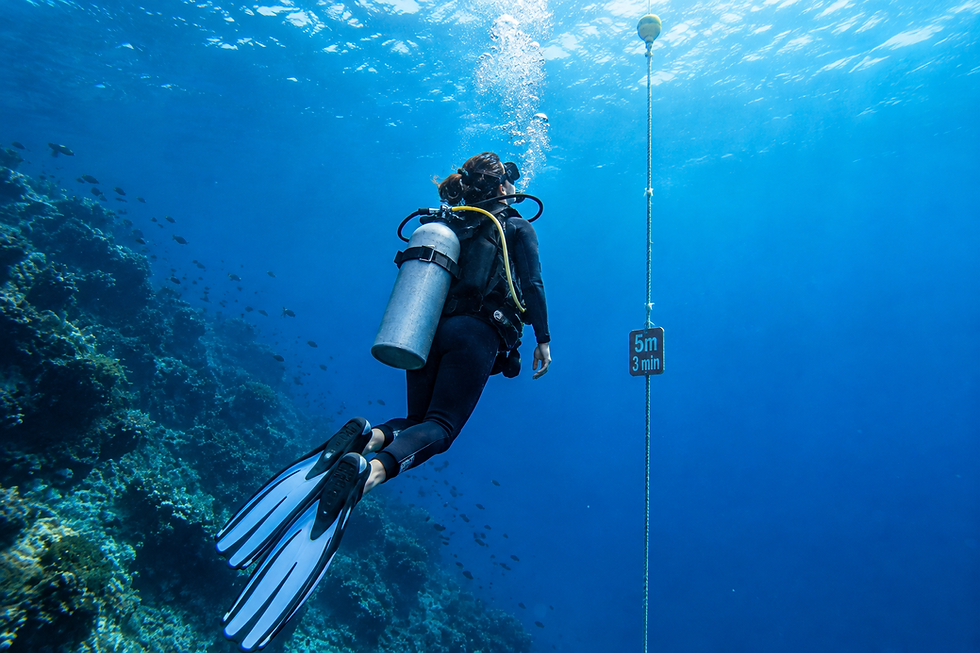
A commonly taught recreational diving guideline is to ascend no faster than approximately 9 metres (30 feet) per minute, or the slower rate specified by your training agency or dive computer. Your instructor may also recommend a safety stop, often around five metres (15 feet) for three minutes, when appropriate for the dive profile and training standards. A safety stop does not eliminate every risk, and it should never replace proper ascent procedures. During adventure scuba diving in Bali, following your guide's instructions is especially important when diving in currents or around deeper reefs. Never rush toward the surface simply because you are excited to finish your dive.
Rule 3: Equalize Your Ears and Other Air Spaces
The third rule is to equalize early and often as you descend. Water pressure increases with depth, placing pressure on air-filled spaces in your body, particularly your middle ears and sinuses. If the pressure inside these spaces doesn't equalize with the surrounding water, you may experience discomfort or a pressure-related injury called barotrauma.
How to Equalize Properly
Start equalizing before discomfort develops, and repeat the process gently as you descend. Depending on your training, you may swallow, move your jaw, or gently pinch your nose and blow to help equalize your ears. Never force the maneuver. If you cannot equalize, stop descending and ascend slightly until the discomfort eases before trying again. If the problem continues, end the descent and follow your instructor's guidance. Never dive through sharp ear pain, and do not dive with significant congestion that prevents equalization.

Rule 4: Monitor Your Air Supply and Dive Within Your Limits
The fourth rule emphasizes checking your air supply, monitoring your depth and time, and staying within your training and comfort levels. Your scuba tank contains a limited supply of breathing gas. Losing track of your remaining air or continuing a dive beyond your experience can quickly turn an enjoyable adventure into an emergency.
Develop Safe Air-Management Habits
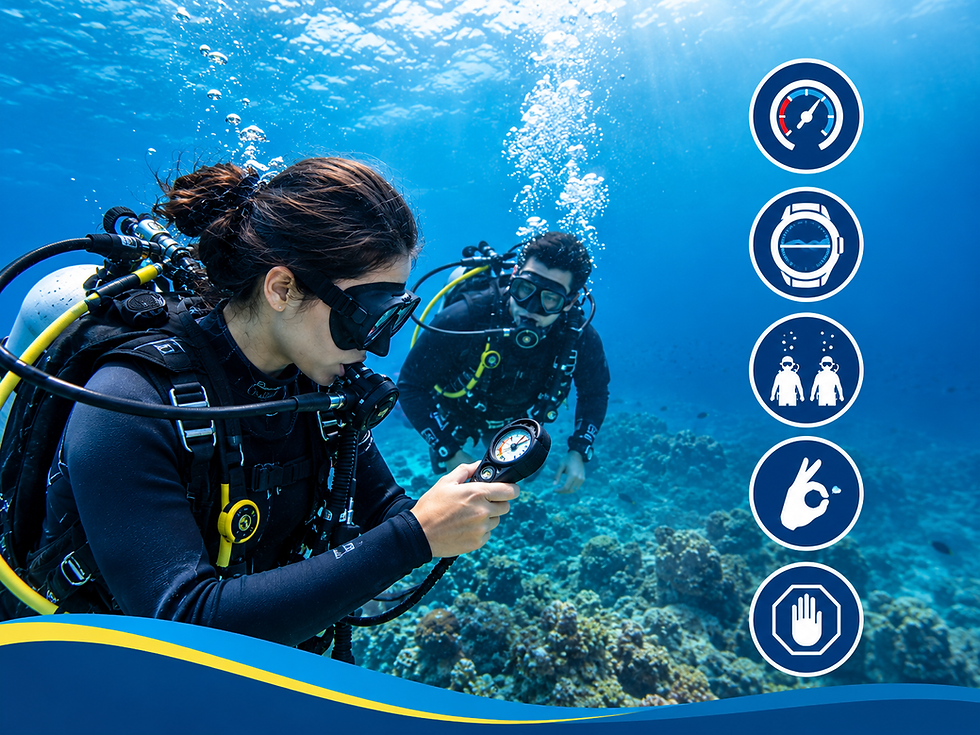
Check your pressure gauge regularly and agree with your buddy on the air levels that will trigger the end of the dive. Monitor your depth, dive time, and no-decompression limits using your training, dive computer, and professional guidance. Stay close enough to your buddy to communicate and respond if assistance becomes necessary. Never assume that someone else is monitoring your air supply for you. If you feel uncomfortable, become exhausted, or notice an equipment problem, signal your buddy and follow your emergency procedures. Good divers know that ending a dive early is sometimes the smartest decision.
2. Why Are Scuba Diving Rules So Important?
Scuba diving safety rules are designed to reduce preventable injuries and help divers respond calmly to changing underwater conditions. Although modern equipment makes diving more accessible, it cannot replace proper training, sound judgment, and responsible behavior. Pressure changes, limited air supplies, currents, and reduced visibility can create challenges even for experienced divers. Following established procedures helps you anticipate these situations instead of reacting in panic. Think of these rules as your underwater roadmap. They guide your decisions, protect your health, and allow you to focus on the beauty around you. For Indonesian travelers and international visitors planning their next ocean adventure, learning these principles before booking a dive is a practical way to prepare for a safer experience.
3. Discover Adventure Scuba Diving in Bali
Bali is one of Indonesia's most exciting destinations for underwater exploration. Its diving locations offer a remarkable mix of coral reefs, colorful fish, dramatic underwater landscapes, and opportunities to encounter larger marine animals. From the accessible reefs around Padang Bai to the famous underwater attractions of Nusa Penida and the wreck at Tulamben, divers can find experiences suited to different interests and skill levels. However, not every site is suitable for every diver. Currents, water conditions, depth, and visibility vary by location and season.
Popular Diving Locations in Bali
Tulamben: Famous for the USAT Liberty shipwreck and its diverse marine life.
Nusa Penida: Known for dramatic underwater scenery and seasonal encounters with manta rays and, under suitable conditions, mola mola.
Padang Bai: Offers reef dives and a range of underwater environments for appropriately qualified divers.
Amed: Popular for relaxed coastal diving, coral gardens, and underwater photography.
Choose your dive site according to your experience, current conditions, and the advice of a qualified local professional. Exciting marine encounters are never guaranteed, and wildlife should always be observed without touching or chasing it.
4. Choosing the Right Bali Dive Shop
Selecting a reputable Bali dive shop is an important part of planning your underwater adventure. A professional operator should prioritize safety, maintain suitable equipment, and provide clear explanations before every dive. Before booking, ask about instructor qualifications, group sizes, emergency equipment, dive briefings, and the suitability of the proposed site for your experience. Check that the operator follows recognized training standards and explains its safety procedures transparently. Beginners should also confirm whether the experience includes a pool or confined-water session, appropriate supervision, and a clear explanation of what happens if they feel uncomfortable. Dive Concepts can be a name to consider when researching diving experiences in Bali. Evaluate its current courses, services, instructor credentials, and safety practices directly before making a booking. Choosing a dive centre based on verified qualifications and responsible operating practices is more valuable than selecting one based on price alone.
5. Why Work With a Divemaster in Bali?
A qualified divemaster Bali professional can help make your diving experience more organized, informative, and enjoyable. Divemasters commonly guide certified recreational divers, assist instructors, and help manage dive activities within their qualifications and the operator's procedures. They can explain local conditions, identify interesting marine life, demonstrate responsible reef etiquette, and help divers understand the plan for each dive. However, a divemaster is not a substitute for appropriate certification or instructor-led training. If you're a beginner, choose a program with supervision appropriate to your experience and follow all medical and training requirements. Before entering the water, discuss hand signals, buddy procedures, maximum depth, expected conditions, air checks, and the plan for returning to the surface. Clear communication builds confidence and helps everyone understand their responsibilities.
6. How to Prepare for Your First Scuba Dive in Bali
A little preparation can make a tremendous difference to your first underwater experience. You don't need to be an expert swimmer or experienced ocean explorer to begin learning scuba diving, but you do need to meet the applicable medical, swimming, and training requirements. Start by checking the requirements of your chosen training agency and discussing any health concerns with an appropriate medical professional. Complete the required forms honestly and tell your instructor if you're anxious or unfamiliar with the equipment.
Essential Preparation Checklist
Attend the complete dive briefing and ask questions whenever something is unclear.
Learn how to use your regulator, buoyancy control device, mask, and other essential equipment.
Understand underwater hand signals and how to communicate with your buddy.
Check that your mask, fins, and exposure protection fit comfortably.
Follow your instructor's instructions for entering, descending, ascending, and exiting the water.
Never dive when impaired by alcohol or recreational drugs, or when you feel unwell.
Most importantly, don't rush. Your first dive should be about building confidence, understanding your equipment, and enjoying the experience at a comfortable pace.
7. Protect Bali's Marine Environment While Diving
Bali's coral reefs are living ecosystems that provide shelter and food for countless marine species. Responsible divers help preserve these habitats by keeping their movements controlled and minimizing their impact on the underwater environment. Maintain neutral buoyancy so you don't accidentally strike coral with your fins, hands, or equipment. Never stand on a reef, collect marine organisms, or chase wildlife for a photograph.
Small Actions Make a Big Difference
Keep a respectful distance from marine animals and follow local rules for protected areas. Avoid feeding fish, and never remove shells, coral, or other natural objects from the ocean. Choose operators that explain reef-safe diving practices and encourage responsible wildlife encounters. By treating the underwater world with care, you help protect the very environments that make diving in Bali so special.
8. Common Scuba Diving Mistakes Beginners Should Avoid
Beginners sometimes focus so heavily on the excitement of seeing marine life that they forget the basic habits that keep a dive manageable. Fortunately, many common mistakes can be avoided through preparation and consistent practice. The most serious errors include holding your breath, ascending too quickly, ignoring ear pain, failing to monitor air, and separating from your buddy. Each can create unnecessary risks. Other mistakes include diving beyond your certification, ignoring changing currents, using unfamiliar equipment without guidance, and touching coral to steady yourself. If you feel anxious underwater, signal your buddy or instructor and follow the procedures you've learned. Never feel pressured to continue a dive that makes you uncomfortable.
Confidence grows through training and experience, not by taking unnecessary risks.
9. Why Consider Dive Concepts for Your Bali Diving Experience?
When researching the best diving centre in Bali, Indonesia, look beyond promotional claims and focus on the quality of training, safety procedures, equipment maintenance, and customer support. Dive Concepts can be considered as part of your search for a Bali diving experience. Before choosing the centre, confirm its current course offerings, instructor certifications, dive-site options, and suitability for Indonesian clients as well as international visitors. A reliable diving provider should explain costs clearly, discuss site conditions honestly, and match each activity to your certification and ability. It should also make environmental responsibility a normal part of every dive briefing. For Indonesian clients planning a local holiday or an underwater adventure with friends, comparing these factors can help you make an informed decision. The right dive centre should make safety a priority while helping you appreciate Bali's extraordinary marine biodiversity.
10. Conclusion: Follow the Four Rules and Enjoy Safer Diving
Understanding the four fundamental rules of scuba diving helps you explore the underwater world with greater confidence and awareness. Remember to breathe continuously, ascend slowly, equalize early and often, and monitor your air supply while staying within your limits. These habits are essential whether you're learning to dive for the first time or preparing for another underwater adventure. Combined with professional instruction, suitable equipment, and responsible environmental practices, they can help you enjoy the ocean more safely. If you're planning adventure scuba diving in Bali, research a reputable Bali dive shop, consult a qualified divemaster Bali, and choose a dive site appropriate for your experience. Dive Concepts is one option to investigate as you compare local diving providers. Bali's underwater world is waiting to be discovered. Prepare carefully, respect the ocean, and remember that the best dive is one that ends safely.
Frequently Asked Questions (FAQs)
1. What are the four main rules of scuba diving?
The four fundamental rules are to breathe continuously without holding your breath, ascend slowly, equalize your ears and other air spaces regularly, and monitor your air supply while staying within your training limits. Following these principles helps reduce common diving risks.
2. Can beginners go scuba diving in Bali?
Yes. Beginners can participate in suitable introductory experiences with a qualified instructor, provided they meet the program's medical, swimming, and other requirements. Choose a sheltered site with conditions appropriate for first-time divers.
3. How deep can a beginner scuba diver go?
Depth limits depend on the training program and supervision. Many introductory experiences limit participants to relatively shallow water, often around 12 metres, while entry-level certification commonly permits dives to 18 metres under the applicable training standards. Always follow your certification limits and instructor's guidance.
4. How do I choose the best Bali dive shop?
Look for qualified instructors, maintained equipment, transparent pricing, appropriate group sizes, detailed safety briefings, and dive sites suited to your experience. Ask about emergency procedures and check the operator's current credentials before booking.
5. Is Dive Concepts a good option for scuba diving in Bali?
Dive Concepts is worth researching when comparing diving providers in Bali. Contact the centre directly to verify its current services, instructor qualifications, safety standards, course availability, and prices before deciding whether it suits your needs.


Comments