
PADI Open Water Diver Course Bali Price 2026: Complete Cost Breakdown

Updated: Sep 29

If you're comparing prices for a PADI Open Water Diver Course Bali, you can generally expect to pay around IDR 5.5 million–8.5 million (approximately US$350–$550) in 2026. The final cost depends on the dive center, course duration, group size, location, and what's included. Private instruction and premium packages can cost more, while referral options may be less expensive if you've already completed the required parts of your training elsewhere.
This guide breaks down what you're actually paying for, what's included in the course price, why costs vary across Bali's dive regions, and how to compare dive centers so you can choose a quality course without overpaying.
What Is the PADI Open Water Diver Course?
The PADI Open Water Diver course is the entry-level scuba certification recognized by dive operators worldwide. It combines theory (via PADI's eLearning platform or in-person sessions), confined water skills practice (usually a pool or shallow bay), and four open-water dives supervised by a certified instructor. Once issued, the certification never expires and lets you rent gear and dive independently with a buddy anywhere in the world.
Bali is one of the most popular places globally to complete this course, thanks to warm water year-round, calm training sites, and dive centers experienced in teaching first-timers.
PADI Open Water Bali Price at a Glance
Course Type | Duration | Typical Price Range (USD) |
Standard group course | 3 days | $350 – $450 |
Private / 1-on-1 instruction | 3–4 days | $500 – $700+ |
Referral course (eLearning + confined water done elsewhere) | 2 days | $250 – $320 |
eLearning theory + full in-water course | 3 days | Included in standard price |
Prices are per person, quoted at listed rates, and can shift with group size, season, and the dive center's location within Bali. Always confirm the final total directly with the operator before booking, since currency conversion and seasonal promotions move the number slightly.
What's Included in the Price
Across most established Bali dive centers, your course fee covers:
PADI eLearning materials and certification processing fee the official PADI cost, non-negotiable across all operators
Full equipment rental BCD, regulator, wetsuit, tank, weights, mask, fins
A certified PADI instructor for both theory review and all open-water dives
Marine park entry fees and boat/porter fees, especially relevant at sites like Tulamben's USAT Liberty wreck or the Menjangan Marine Park near Pemuteran
Meals on course days typically lunch
Basic liability insurance covering the course activities
What's Usually Not Included
Accommodation for your 3 days in Bali
Airport transfers (some centers include local hotel pickup, others don't always ask)
Gratuities for your instructor and boat crew
Additional fun dives once you're certified
Specialty courses (Advanced Open Water, Nitrox, Rescue Diver)
Personal gear you might choose to purchase afterward
Why Prices Vary: A Region-by-Region Breakdown
Bali isn't one dive destination, it's several, and where your course runs affects the price.
Tulamben is home to the USAT Liberty wreck, one of Southeast Asia's most famous shore dives. Because training happens right off the beach with no boat required, courses here tend to sit at the lower-to-mid end of the price range.
Amed, on Bali's east coast, offers calm conditions and a mix of coral gardens and small wrecks. Pricing is similar to Tulamben, with slightly more variation between operators.
Pemuteran and the Menjangan Marine Park on the northwest coast are known for pristine reefs and biorock restoration projects. Courses here can run slightly higher due to marine park permit fees and longer transfer times from South Bali.
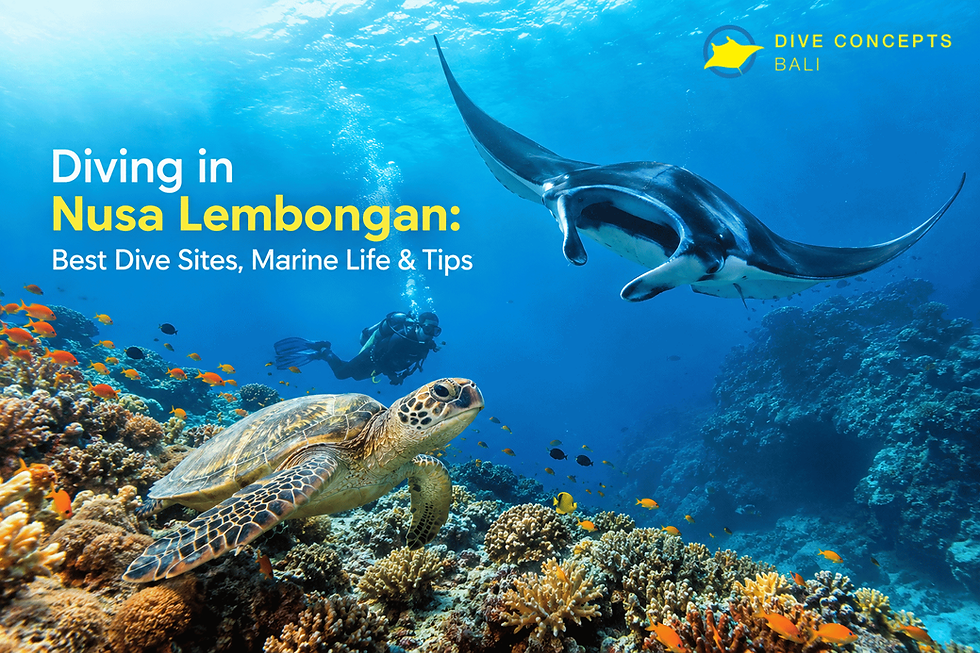
Nusa Lembongan and Nusa Penida are known for manta ray and mola mola (sunfish) encounters, but stronger currents mean some operators use smaller instructor-to-student ratios for beginner courses, which can push prices up.
If your schedule allows it, choosing a shore-based training site like Tulamben or Amed is usually the most budget-efficient option without sacrificing dive quality; you simply won't see mantas or mola mola during the certification dives themselves.
PADI vs SSI: Does Certification Agency Affect Price?
Bali dive centers commonly offer both PADI (Professional Association of Diving Instructors) and SSI (Scuba Schools International) certifications, and pricing between the two is usually comparable at the same operator. The practical differences are administrative rather than in dive quality: SSI courses often use a digital logbook and app-based materials, while PADI is the more globally recognized brand name among casual divers. If you're planning to continue toward Divemaster or Instructor level, it's worth confirming which agency your chosen dive center specializes in, since crossing over between agencies later adds cost and paperwork.
Group Course vs Private Course vs Referral Course
Group courses (typically 2–4 students per instructor) are the standard, most affordable option and are perfectly adequate for most first-time divers.
Private instruction costs considerably more often 40–60% above the group rate but gives you a flexible schedule and one-on-one pacing, which suits nervous first-timers or travelers on a tight itinerary.
Referral courses are the budget option: you complete the PADI eLearning theory and confined water (pool) sessions before you arrive, then do only the open-water dives in Bali. This can cut your Bali-based course cost by roughly a third, since you're paying for fewer instructor days.
Is Bali Cheaper Than Certifying at Home?
Generally, yes. In the US, UK, and Australia, PADI Open Water courses commonly cost $500–$800 or more, partly due to higher instructor wages and pool rental costs. Bali's combination of warm-water training conditions, lower operating costs, and high dive-center density makes it one of the more cost-effective places worldwide to certify without any compromise on instruction standards, since PADI's training requirements are identical regardless of location.
Red Flags: When a "Cheap" Course Is a Bad Deal
A significantly below-market quote isn't automatically a scam, but it's worth checking a few things before booking:
Group size. Ask directly how many students will be in your class. Anything above a 4:1 student-to-instructor ratio for Open Water training is worth questioning.
Equipment age and condition. Read recent reviews specifically mentioning gear quality, not just overall star ratings.
What's excluded? Some rock-bottom quotes exclude marine park fees or transfers, which get added back later.
Instructor certification level. Confirm your instructor is a PADI-certified Open Water Scuba Instructor (OWSI), not just a divemaster supervising under someone else's card.
Cancellation and rescheduling policy, particularly important given Bali's occasional weather-related visibility changes.
How to Choose the Right Dive Center in Bali
Compare at least three quotes for identical inclusions, prices can differ by $100 or more between operators in the same region.
Ask what's included in writing before paying a deposit, hotel transfer, meals, and gear rental aren't standardized across the industry.
Check whether the center operates in multiple regions. Dive centers with several locations around Bali Dive Concepts, for example, runs dive centers in Amed, Tulamben, Pemuteran/Menjangan, and Nusa Lembongan can be useful if you want to combine your certification with fun dives in a different marine environment afterward, without switching operators.
Look for small-group commitments and added perks like free Nitrox for certified divers, which some operators offer at no extra charge once you're certified.
Recent, detailed reviews focus on comments about instructor patience, punctuality, and equipment condition rather than just the star rating.
Life After Certification: What Comes Next
Once certified, most divers either book fun dives to explore sites their course didn't cover, or continue training toward Advanced Open Water. If diving becomes a genuine passion rather than a holiday activity, Bali is also a common starting point for the Divemaster pathway, the first professional-level PADI certification, which qualifies you to guide certified divers and assist instructors. Several Bali-based operators run "Zero to Hero" style programs that take a new diver from Open Water through to Divemaster over several weeks, combining course fees into a package rate that's typically more economical than booking each course separately.
Key Takeaways
Expect to pay $350–$450 USD for a standard 3-day PADI Open Water course in Bali, with private and referral options adjusting that range.
Course price should include equipment, instructor, marine park fees, and PADI certification always confirms this in writing.
Prices vary by region (Tulamben and Amed tend to run lower than Nusa Lembongan or Pemuteran) more than by certification agency.
Bali is generally cheaper than certifying in the US, UK, or Australia, without lowering training standards.
Compare group size, instructor certification level, and what's excluded, not just the headline price before booking.
Frequently Asked Questions
How much does PADI Open Water cost in Bali?
Most standard 3-day group courses cost $350–$450 USD, including equipment, instructor fees, marine park fees, and PADI certification processing. Private courses and premium locations can run higher.
How many days does the PADI Open Water course take in Bali?
Typically 3 days: one day of theory and confined water skills, followed by two days covering four open-water dives. Referral courses, where theory is completed before arrival, can be finished in 2 days.
Is the PADI certification I get in Bali valid worldwide?
Yes. PADI Open Water Diver certification never expires and is recognized by dive operators globally, regardless of where you completed the course.
Do I need to know how to swim to take the course?
Yes. PADI requires basic swimming ability and comfort in the water as a prerequisite for enrollment.
What's the cheapest way to get PADI certified in Bali?
Completing the PADI eLearning theory online before you arrive and booking a referral course for just the open-water dives is usually the most cost-effective route, since you're paying for fewer instructor-led days.
Is PADI or SSI better for diving in Bali?
Neither is objectively better, both meet the same World Recreational Scuba Training Council standards. PADI is more globally recognized as a brand; SSI often uses app-based digital materials. Pricing between the two is usually similar at the same dive center.
Should I book my course before arriving in Bali, or in person?
Booking a few weeks ahead is recommended during peak season (July–August, December–January) to secure your preferred dates and instructor language, though many centers accept walk-in bookings with a day or two of lead time in shoulder season.
Conclusion
A PADI Open Water Diver course in Bali is one of the more affordable ways to get a lifetime diving certification without cutting corners on quality provided you know what should be included in the price. Use the $350–$450 range as your baseline, confirm inclusions in writing, and weigh region and group size as carefully as the number on the quote. If you're planning your Bali trip around diving, comparing a couple of operators across different regions rather than booking the first quote you see is the single best way to make sure you're getting real value for your certification.
Comments