
What Animals Live on Komodo Island? Complete Wildlife Guide (Land + Sea)


Direct answer: Komodo Island is home to the Komodo dragon, Timor deer, water buffalo, wild boar, crab-eating macaques, Asian palm civets, the endemic Komodo rat, and more than 70 bird species, including the yellow-crested cockatoo. Its surrounding waters, part of Komodo National Park, hold over 1,000 fish species, 260 types of coral, manta rays, sharks, dolphins, and whales, making it one of the most biodiverse destinations on Earth both on land and underwater.
Most travelers come to Komodo National Park chasing one animal: the Komodo dragon. But this UNESCO World Heritage Site, spread across the Lesser Sunda Islands of Indonesia, supports a far wider cast of wildlife on savannah hillsides, in mangrove forests, and beneath some of the richest reefs in the Coral Triangle. This guide covers every major species you can realistically encounter, where to find them, when to go, and how Dive Concepts operating liveaboard cruises in Komodo for over a decade recommends experiencing them responsibly.
Quick-Facts Snapshot
Fact | Detail |
Total Komodo dragon population (wild) | ~3,300–3,400 individuals (2023–2026 estimates) |
IUCN status of Komodo dragon | Endangered (uplisted from Vulnerable in 2021) |
Islands with wild dragons | Komodo, Rinca, Gili Motang, Nusa Kode, west Flores |
Terrestrial mammal species | 7+ (Timor deer, water buffalo, wild boar, macaque, civet, Komodo rat, fruit bats) |
Bird species recorded | 72+ |
Reef-building coral species | 260 |
Tropical fish species | 1,000+ |
Marine mammal species | 6 whale species, 10 dolphin species |
UNESCO World Heritage status | Since 1991 |
Marine area of the park | 67% of total park area |
Komodo National Park at a Glance
Komodo National Park sits in the Lesser Sunda Islands of eastern Indonesia, spanning three larger islands Komodo, Padar, and Rinca plus 26 smaller islands, across roughly 1,733 km² of land and sea. It was established by the Indonesian government specifically to protect the Komodo dragon and was inscribed as a UNESCO World Heritage Site in 1991. Over time, the park's mission expanded to protect its full range of terrestrial and marine biodiversity, not just its most famous resident.
Key takeaway: Komodo isn't a single-species park. Its UNESCO listing exists because the ecosystem as a whole, including dragons, deer, reefs, and pelagics is globally significant.
The Komodo Dragon: The Island's Apex Predator
What is it? The Komodo dragon (Varanus komodoensis), also called the Komodo monitor, is the world's largest living lizard, found nowhere else on Earth outside this small cluster of Indonesian islands.
Why it matters: It is the top predator of the island's food web, an IUCN Endangered species, and the reason Komodo National Park exists at all.
Key facts:
Grows up to 3 meters (10 ft) long and can weigh over 135 kg (nearly 300 lbs)
Can sprint in short bursts up to 20 km/h
Uses a combination of bite force, sharp serrated teeth, and toxic saliva-borne bacteria/venom compounds to bring down prey
Preys mainly on Timor deer, wild boar, and water buffalo; also scavenges carrion
Global wild population: approximately 3,300–3,400 individuals as of the most recent 2023–2026 surveys, with roughly two-thirds living on Komodo and Rinca Islands
Listed as Endangered on the IUCN Red List since 2021 (previously Vulnerable), due to habitat loss, rising sea levels, and climate-driven range contraction one study found a 44% range contraction on Flores in five years
Is it safe to see them? Yes, when visiting with licensed park rangers on marked trails. Komodo dragons are wild predators, and unguided encounters are genuinely dangerous and always stay within ranger-led groups on Komodo or Rinca Island.
Other Land Animals of Komodo Island
Beyond the dragon, Komodo's terrestrial wildlife is a mix of Asian-origin mammals (introduced or naturally arrived over millennia) and Australian-origin bird species, a reflection of the island's position on the Wallace Line, the biogeographic boundary between Asian and Australian fauna.
Animal | Scientific Name | Role/Notes | Native to Komodo? |
Timor deer | Cervus timorensis (Rusa timorensis) | Main prey of the Komodo dragon; listed as Vulnerable on IUCN Red List | Yes (regional endemic) |
Water buffalo | Bubalus bubalis | Large prey animal; not originally native to the islands | No (introduced) |
Wild boar | Sus scrofa | Fierce prey species despite its size | No (introduced) |
Crab-eating macaque | Macaca fascicularis | Uses stones as tools to crack shellfish and nuts | Yes |
Asian palm civet | Paradoxurus hermaphroditus | Nocturnal, solitary, rarely seen by day | Yes |
Komodo rat | Komodomys rintjanus | Endemic rodent found only in this island group | Yes (endemic) |
Flying fox / giant fruit bat | Pteropus vampyrus | Colonies of thousands roost on Kalong Island | Yes |
Domestic goats, horses, cats, dogs | — | Kept by local communities within the park boundary | Domesticated |
Key takeaway: Not every animal in Komodo National Park is native water buffalo and wild boar were introduced but are now naturalized prey species that sustain the dragon population.
Birds of Komodo Island
Komodo National Park has recorded more than 72 bird species, several of Australian origin, making it a genuinely rewarding stop for birdwatchers, not just reptile fans.
Yellow-crested cockatoo (Cacatua sulphurea) Critically Endangered; population collapsed after over 100,000 birds were legally exported from Indonesia between 1980–1992; roughly 1,000 individuals now survive across the park
Orange-footed scrubfowl ground-dwelling, builds large incubation mounds
White-bellied sea eagle skilled hunter, preys on sea snakes and small turtles, ranges across Indonesia, New Guinea, and Australia
Flores hawk-eagle extremely rare, found on Rinca and Flores only
Great-billed parrot, green junglefowl, zebra dove, spotted dove, green imperial pigeon, lemon-bellied white-eye round out the park's colorful bird checklist
Reptiles & Snakes of Komodo Island
Beyond the dragon, Rinca Island alone hosts around 12 terrestrial snake species, including:
Cobra
Russell's pit viper
Green tree viper
Timor python one of the largest snakes found in the park
Other reptiles include various skinks, geckos, and limbless lizards, plus several frog species concentrated in higher, moisture-retaining altitudes.
Marine Animals of Komodo National Park
What lives underwater in Komodo? Komodo's waters, part of the Coral Triangle, hold over 1,000 species of tropical fish, 260 species of reef-building coral, 70 sponge varieties, 6 whale species, 10 dolphin species, multiple shark species, and large pelagics such as manta rays making the marine side of Komodo just as extraordinary as its famous dragons.
Roughly 67% of Komodo National Park's total area is marine, and its underwater biodiversity is a major reason it ranks among the top dive destinations in the world.
Marine Animal | Where to See It | Notes |
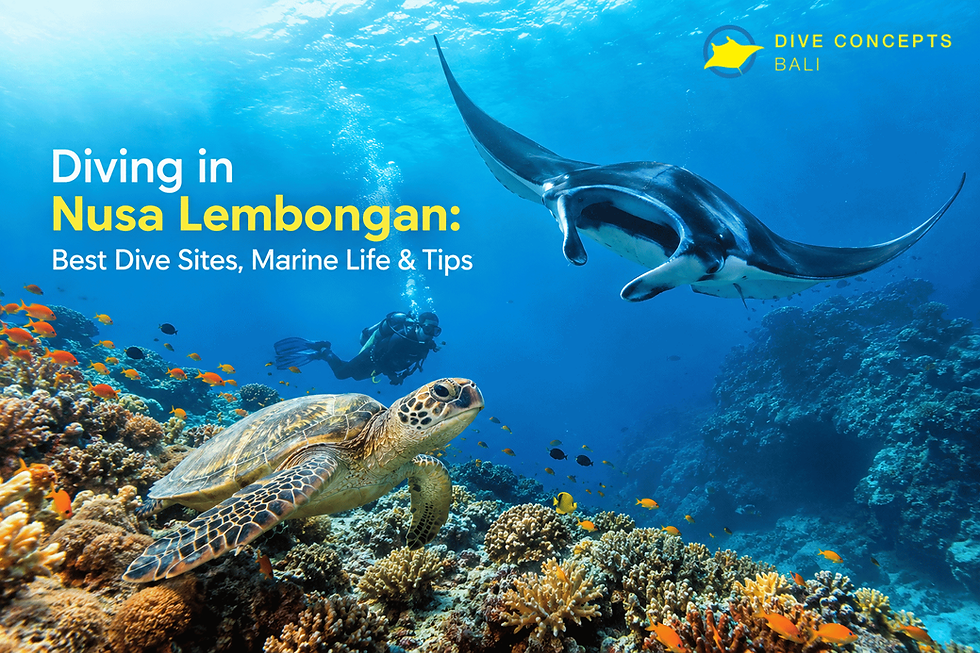
Manta ray | Manta Alley, Makassar Reef | Cleaning stations attract regular sightings |
Whale shark | Seasonal, deeper channels | Rare but recorded in Komodo waters |
Hammerhead shark | Deeper drop-offs | More common on dedicated pelagic dives |
Grey reef shark | Batu Bolong, Castle Rock, Crystal Rock | Frequently seen on drift dives |
Dolphins (10+ species) | Open channels between islands | Often spotted from the boat while sailing |
Whales (6+ species) | Deeper straits | Seasonal migratory sightings |
Sea turtles | Reef slopes throughout the park | Common on almost every reef dive |
Giant trevally | Batu Bolong, Crystal Rock | Fast-moving pelagic hunter |
Reef fish (1,000+ species) | Every dive site in the park | Coral Triangle-level diversity |
Key takeaway: If you only think of Komodo as "the dragon island," you're missing half the story of its reefs rivalling anywhere in the Coral Triangle for sheer species density.
Land vs. Marine Wildlife of Komodo Comparison Table
Category | Land Wildlife | Marine Wildlife |
Signature species | Komodo dragon | Manta ray |
Species count | ~7 mammal species, 72+ birds, 12+ snakes | 1,000+ fish, 260 coral species |
Best way to see it | Ranger-guided trek | Scuba diving / snorkeling |
Best islands/sites | Komodo, Rinca | Manta Alley, Batu Bolong, Makassar Reef |
Conservation status highlight | Komodo dragon: Endangered (IUCN) | Manta ray: Vulnerable (IUCN), reef-dependent species |
Peak viewing season | Year-round (dry season easiest for trekking) | April–December (north), January–March (south) |
Bonus: Where to See the Mola Mola in Bali (Nusa Penida & Nusa Lembongan)
While the Mola Mola (Mola mola), or ocean sunfish, does not live around Komodo Island itself, it's one of Indonesia's most sought-after marine encounters and is closely tied to the same Coral Triangle ecosystem that makes Komodo's waters so rich. If Komodo's wildlife has you hooked on Indonesian marine biodiversity, the Mola Mola in Bali is the natural next stop on your dive itinerary.
What is it? The Mola Mola is the heaviest known bony fish in the world, spending most of its life below 200 meters and rising into shallower, cooler upwelling zones famously around Nusa Penida and Nusa Lembongan, Bali to be cleaned by banner fish and angelfish at cleaning stations.
When to see it: Mola Mola sightings around Bali happen year-round but peak from July to November, when cold-water upwellings pull them up to depths divers can reach, typically between 6 and 65 meters, with the best visibility (up to 40 meters) concentrated around this window.
Where exactly: The Nusa Lembongan and Nusa Penida area, plus the Lombok Strait, are the most reliable Mola Mola sites in Bali and one of the very few places in the world with such consistent sightings. Dive Concepts runs dedicated Mola Mola diving trips from its Lembongan dive center, alongside its Komodo liveaboard cruises, so divers exploring Indonesia's wildlife can realistically combine both experiences in one trip.
Key takeaway: Komodo gives you the dragon and the reef; Bali's Nusa Penida gives you the Mola Mola. Together, they cover two of Indonesia's most iconic and completely different wildlife encounters.
Best Time to See Komodo's Wildlife
Season | Months | Best For |
North Komodo cruise season | April–December | Batu Bolong, Castle Rock, Makassar Reef, dragon treks on Rinca/Komodo |
South Komodo cruise season | January–March | Padar Island, South Rinca, Manta Alley, calmer seas |
Year-round | All year | Komodo dragon trekking on Komodo/Rinca (dry season, May–Oct, is most comfortable) |
Mola Mola season (Bali) | July–November | Nusa Penida & Nusa Lembongan sunfish sightings |
Common Mistakes Travelers Make When Wildlife-Spotting in Komodo
Skipping ranger guides on land treks, Komodo dragons are wild apex predators; always trek with licensed park rangers.
Booking only a 1-day trip Most of the park's best marine sites (Manta Alley, Makassar Reef) require a multi-day liveaboard to reach comfortably.
Ignoring the season for the region you want, North and South Komodo have different optimal months; booking the wrong month means missing key sites.
Assuming Mola Mola can be seen at Komodo It's a Bali (Nusa Penida/Lembongan) species; conflating the two locations leads to disappointment.
Diving without Advanced certification/drift experience Many of Komodo's best sites involve strong currents; an Advanced Open Water course or drift diving specialty is strongly recommended.
Not budgeting for park/conservation fees Marine park and port authority fees are typically not included in cruise packages.
Conservation Status & Why It Matters
Species | IUCN Status | Main Threat |
Komodo dragon | Endangered (since 2021) | Climate change, rising sea levels, habitat contraction (up to 30% habitat loss projected within 45 years) |
Timor deer | Vulnerable | Hunting pressure, habitat loss |
Yellow-crested cockatoo | Critically Endangered | Historic illegal export trade |
Manta ray | Vulnerable | Bycatch, targeted fishing for gill plates |
Komodo National Park's conservation funding (an estimated $15 million annual budget as of 2026) supports ranger patrols, genetic monitoring, community-based programs, and coral restoration funded in significant part by regulated, ranger-guided tourism. Responsible visits directly support the survival of these species.
Expert Tips from Dive Concepts
With more than 10 years of experience running liveaboard cruises and dive concepts across Bali, Komodo, and Raja Ampat, our operational insight from hundreds of Komodo departures is consistent: the highest-value trips combine a land component (Komodo dragon trek on Rinca or Komodo) with a marine component (Manta Alley or Makassar Reef) rather than choosing one over the other. Divers who add on a few days in Bali before or after their Komodo cruise timed for July–November also get a realistic shot at the Mola Mola, turning a single trip into a complete Indonesian wildlife itinerary.
Key Takeaways
Komodo Island's land wildlife includes the Komodo dragon, Timor deer, water buffalo, wild boar, macaques, civets, the endemic Komodo rat, and 72+ bird species.
Its marine waters hold over 1,000 fish species, 260 coral species, manta rays, sharks, dolphins, and whales.
The Komodo dragon is Endangered on the IUCN Red List, with a wild population of roughly 3,300–3,400 individuals.
Mola Mola sunfish are not found around Komodo; they're a Bali (Nusa Penida/Lembongan) specialty, best seen July–November.
The best Komodo experience combines a ranger-guided land trek with a multi-day liveaboard for marine sites like Manta Alley and Makassar Reef.
FAQ Section
Q1: What animals live on Komodo Island besides the Komodo dragon?
A: Komodo Island is also home to Timor deer, water buffalo, wild boar, crab-eating macaques, Asian palm civets, the endemic Komodo rat, over 70 bird species, and several snake species including cobras and pythons.
Q2: How many Komodo dragons are left in the wild?
A: Current estimates place the wild population at approximately 3,300–3,400 individuals as of 2023–2026 surveys, with roughly two-thirds living on Komodo and Rinca Islands. The species is listed as Endangered on the IUCN Red List.
Q3: Are there sharks in Komodo National Park?
A: Yes. Grey reef sharks and hammerhead sharks are regularly seen at dive sites like Batu Bolong, Castle Rock, and Crystal Rock, particularly on deeper or current-swept dives.
Q4: Can you see manta rays in Komodo?
A: Yes, Manta Alley and Makassar Reef are well-known cleaning stations where manta ray sightings are common, especially during the South Komodo season (January–March).
Q5: Is the Mola Mola found in Komodo?
A: No. The Mola Mola (ocean sunfish) is not typically found around Komodo Island; it's best seen around Nusa Penida and Nusa Lembongan in Bali, particularly from July to November.
Q6: What is the biggest predator on Komodo Island?
A: The Komodo dragon (Varanus komodoensis) is the apex predator, capable of taking down prey as large as water buffalo through a combination of bite force, sharp teeth, and toxic saliva.
Q7: Is it dangerous to visit Komodo Island because of the dragons?
A: It's safe when visiting with licensed park rangers on designated trails. Komodo dragons are wild and unpredictable, so unguided encounters should be avoided entirely.


Comments